THE LIVER
FUNCTIONS
-
Is an Important Organ in Digestion and Homeostasis:
-
It allows blood concentration of nutrients, hormone and etc. to remain constant and also aids in the secretion of bile and nucleotidase which are needed enzymes for digestion
-
-
Interconversion of Nutrients:
-
Can convert carbohydrates into fat and amino acids can be converted into carbohydrates and fats.
-
-
Produces 1.5 Litres of Bile a Day:
-
Removes Toxins from the Blood:
-
Removes unwanted particulate matter from the blood through the macrophages or large white blood cells from the spleen.
-
-
Destroys Old Red Blood Cells:
-
Produces Urea:
-
Removal of amino acids result in the waste product ammonia being produced. As such the liver converts ammonia to urea and removes it through the urine.
-
-
Manufactures Cholesterol:
-
Stores Iron:
-
Stores Vitamins:
-
Mankes Red Blood Cells (IN EMBRYOS NOT HUMANS!)

Disorders of the Liver
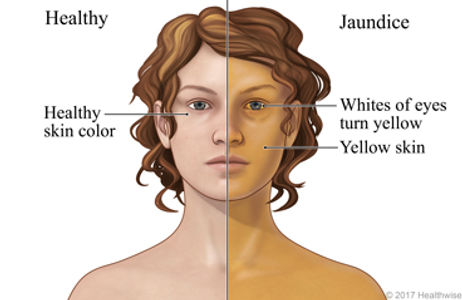
JAUNDICE:
-
This is a generalized condition. When someone has jaundice they tend to have a yellow tinted skin color which results due to the buildup of bilirubin which is produced in the body when red blood cells are broken down
-
When liver damage or the blockage of a bile duct occurs that triggers jaundice to occur as well.