Main Functions of the Urinary System
Main Functions of the Urinary System:
1. EXCRETION: To rid the body of metabolic waste which is toxic to our blood (urea, uric acid, creatinine).
2. OSMOLARITY: To maintain normal water-salt balance.
3. ACIDITY: To maintain acid-base level n the blood (pH).
Main Organs that Excrete Waste:
-
SKIN: Has sweat glands that remove urea and salts through sweat.
-
LIVER: Creates urea and detoxifies the blood.
-
LUNGS: Removes CO2 and H+ ions as we breathe
-
KIDNEYS: Removes uric acid, excess salts, water, and poisonous substances through urine.

Excretion Vs Elimination
Excretion:
-
The removal of waste produced by cell from metabolism like urine, sweat, carbon dioxide, etc.
-
Urine contains salts, ions, urea and 95% water
-
Our bladder can hold 400 to 600 mL of urine before it has to be removed.
-
Amino acids break down into ammonia in the liver which is then combined with carbon dioxide to form urea.
-

Elimination:
-
The removal of waste produced during digestion like fecal waste (ie. poop)

Main Component of the Urinary System
The Kidney:
-
Humans have a pair of kidneys
-
Each kidney is a bean-shaped, 10 cm long organ that is supplied with blood by the renal artery and blood is taken away by the renal vein.
-
-
Kidneys receive about 20% blood flow and only make up 1% of our body weight
-
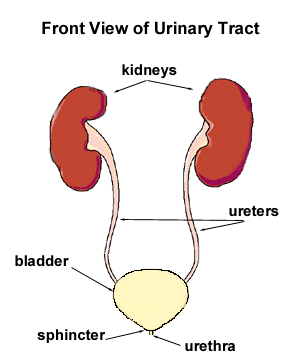
Urine exits the kidney through a duct called the URETER
-
The ureter drains into the URINARY BLADDER
-
Once the bladder is full, urine is expelled through the URETHRA
-
-
The function of the kidney is to maintain osmoregularity (a water-salt balance) and regulate the composition of blood.
TERMS:
KIDNEY: filters blood and removes waste from the body
URETER: carries urine from the kidney to the bladder
BLADDER: stores urine until it can be expelled
URETHRA: takes urine from the bladder to the outside of the body