
THE STOMACH
FUNCTION & STRCTURE
-
The stomach is a thick-walled, "J" shaped organ that lies on the left hand side of the body under the diaphragm.
-
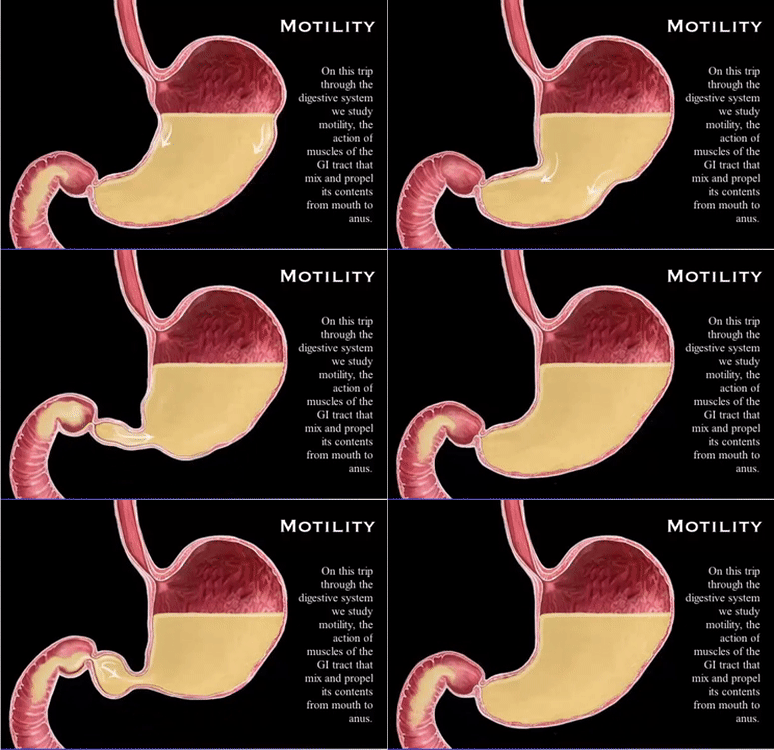
The stomach functions to turn the bolus, a mass of chewed food, into a semi-liquid mass called the ACID CHYME through the process of churning it repeatedly.
-
The stomach empties the acid chyme it produces into the first part of the small intestine called the DUODENUM.
-
This emptying process is controlled by a PYLORIC SPHINCTER at the end of the stomach. It functions just as the cardiac sphincter does.
-
STRUCTURE:
-
The stomach is made up of three layers of muscle that contract to churn and mix the contents within it.
-
Hunger pain is felt when the stomach churns without any food or bolus.
-
-
There is also a mucus lining that lines the sides of the stomach and contains gastric glands that produce gastric juice.
-
Gastric juice contains HCl and pepsinogen and when they combine together pepsinogen forms an enzyme known as pepsin.
-
-
Pepsin is a hydrolytic enzyme that breaks down proteins into smaller chains of amino acids called peptides
-
HCl in gastric juice is also highly corrective and kills bacteria in food and functions to break it down.

Why the Stomach Does Not Digest Itself
-
The inner wall of the stomach is protected by a layer of mucus made in mucosal cells.
-
If the highly corrosive HCl in gastric juice does penetrate the stomach wall, the enzyme pepsin will begin to break down and digest the lining and stomach itself.
-
This will result in the formation of an open sore on the wall of the stomach
-
Too much gastric juice can cause ulcers, which are severe open soares
-
When this occurs it can cause too much nerve stimulation (stress) to build up in this organ and lead to the stomach to begin to over-secret gastric juice.
-
-
-
However, the number one cause of ulcers in actually bacterial infection that can impair mucosal cells from producing mucus to line the walls of the stomach.
