
THE ESOPHAGUS
FUNCTION & STRUCTURE
-
The esophagus is a long muscular tube that functions to transport chewed and saliva covered food known as the bolus from the pharynx to the stomach.
STRUCTURE:
-
The inner layer of the esophagus is lined with a mucus membrane
-
This mucus layer is attached to a layer of smooth muscles (circular and longitudinal muscles) by a connective tissue.
-
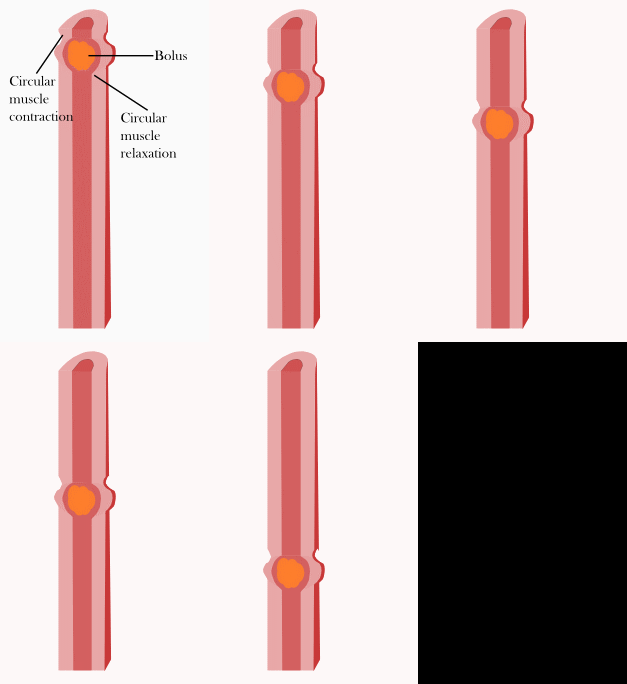
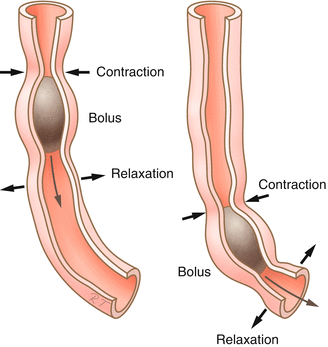
Food moves down the esophagus due to peristalsis which is the rhythmical contractions of the esophageal muscles.

How Peristalsis works
-
Inside the esophagus there is a layer of smooth muscle made up of circular and longitudinal muscles.
-
When the bolus enters the esophagus the longitudinal muscles contract and push the bolus forwards and down the esophagus
-
Then the circular muscles contract and prevent the food from moving upwards in the esophagus as the next longitudinal muscle contracts again to move the bolus further.
-
This process keeps repeating rhythmically and allows the bolus to be pushed downwards towards the stomach
-
When the bolus reaches the end of the esophagus it arrives at the cardiac sphincter which connects to the stomach
-
The cardiac sphincter is made up of muscles that encircle the esophagus and prevent food from leaving the stomach
-
When the cardiac sphincter relaxes it opens up and allows food to enter the stomach and when it is unrelaxed it remains closed and contracts to prevent food from escaping it.
-
Vomiting
-
Vomiting occurs when a reverse peristaltic wave causes the cardiac sphincter to relax and open
-
When this occurs it causes the contents in the stomach to move out and upwards from the stomach and towards the mouth.
-
The content is propelled forwards by the reverse waves in the esophagus which instead of bring food towards the stomach as they normally do now do the reverse and move it towards the mouth.