WHY Does this happen?
-
DNA must replicate before a cell can divide
-
Each strand of DNA is the template that can produce a reverse or complementary copy of itself
-
The new DNA strand that is created has a complementary copy of bases as the template strand
-
This means that depending on the arrangement of nitrogen bases on the template strand of DNA the reverse strand of DNA will have the complementary sequence to that of the template strand.
-
This process of DNA replication is said to be semiconservative since a new strand of DNA can form off the template strand in order to form TWO new strands of DNA
-
This process also requires enzymes to speed it up (ie. enzymes like Helicase and DNA Polymerase)
-


How This Process Works
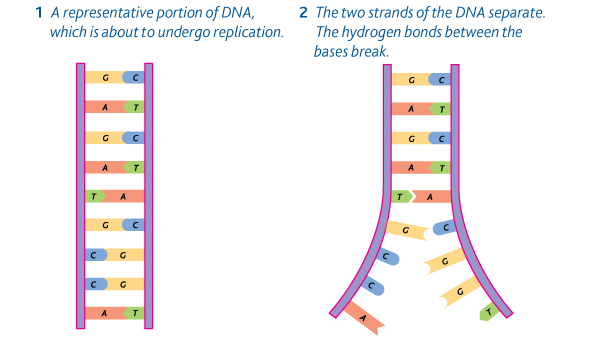
STEP 1: Unzipping of DNA
-
The double helix DNA strand unwinds as hydrogen bonds are broken between the nitrogen bases which allow for the creation of two template strands of DNA. These template strands can be used later to create new strands of DNA.