
What is Cancer & What Causes it?
-
Cancer is when cells begin to RAPIDLY DIVIDE. Unlike normal cells which only divide up to 50 times cancer cells, cancer cells NEVER STOP DIVIDING and therefore, begin to get out of control and create TUMORS.
NORMAL CELLS:
-
In normal tissue cultures, cells grow one layer at a time. When a cell is removed from this tissue culture surrounding cells begin to divide to fill up the space created. These cells STOP DIVIDING when they make contact with any neighbouring cells this process is called CONTACT INHIBITION.
CANCER CELLS:
-
However, cancer cells lose the ability to carry out contact inhibition and therefore, even when these cells are in contact with neighbouring cells they begin to grow out of control rather than stopping.
-
A mass of cancer cells creates a TUMOR and these tumors function to invade and destroy surrounding normal cells.
-
Due to cancer cells constantly dividing they are unable to develop cytoplasm and for this reason the nuclei in these cells appears abnormally large.


Tumours & Signs of Cancer
TUMOURS:
-
Tumours are masses of cells that invade and destroy surrounding cells.
-
To support the growth of a tumour GROWTH FACTORS are released which cause neighbouring blood vessels to grow into the tumour so it can get more oxygen and nutrients to grow.
-
Cancer cells can break off tumours and travel through the circulatory or lymphatic system around the body. If this occurs then tumours can form throughout the body and a chance for a cure is reduced as early detection is important.
SIGNS OF CANCER:
-
Change in bowel movements/bladder habits
-
Sores that do not heal
-
unusual bleeding or discharge
-
thickening of lumps
-
Indigestion or swallowing problems
-
Change in warts or moles
-
Nagging cough or hoarseness (strained breaths)

Types of Tumours
Benign Tumours
-
Have slower growth rate, more differentiated cells, become encapsulated and do not invade or metastasize.
Malignant Tumours
-
Are aggressive, grow rapidly, have many undifferentiated cells, and have a tendency to invade (metastasize)

How Cancer is Formed
Oncagenes & Retroviruses
Oncagenes
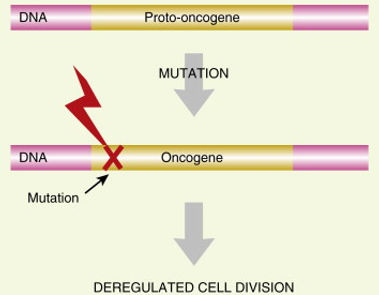
ONCAGENES:
-
Cancer causing genes
-
Can differ from pro-oncagenes by ONE NUCLEOTIDE
PRO-ONCAGENES:
-
Are native and essential to the cell to allow for normal growth
-
Can become mutated into oncagenes
Retroviruses
-
Can change a pro-oncogene into an octagon
-
They insert themselves into healthy cells and release an enzyme that inserts the virus's instructions into the host's DNA
-
Retroviruses take control of the cell and begin to replicate their own DNA to make copies of themselves to then cause cancer and uncontrolled growth in the body.
