
MUTATIONS
Genetic Mutations


-
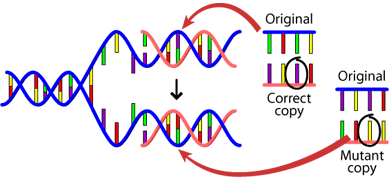
During DNA replication nucleotides in the DNA sequence can be lost, rearranged or paired in error. This changes the genetic code of the DNA and can lead to mutations.
-
When the DNA code becomes riddled with errors then the protein made at the ribosome no longer functions properly since the code on the mRNA molecule becomes filled with the same errors on the DNA molecule.
-
When the codon on the mRNA changes then the ribosome reads a different codon and begins to add the wrong amino acids onto the polypeptide chain during protein synthesis also known as translation.
-
When different amino acids are put onto the polypeptide chain the resulting protein folds in a unique manner and this unique folding or structure of the protein changes its function.
-
A MUTATION is a change in an organism that results from a chemical change in the structure of a gene.
-
This change can first be noticed on the mRNA strand, then on the protein made during translation and finally in the traits of the organism or offspring.
-

Point & Frameshift Mutations
POINT MUTATION:
-
A mutation that occurs when one or more nucleotides in DNA are altered which ruins and changes the existing genetic code on the DNA molecule.
-
SUBSTITUTION: One base is substituted for another base on the DNA molecule.
-
BASE PAIRING ERROR: Base is paired in error with another base. (ie. adenine gets paired with cytosine)
-
FRAMESHIFT MUTATIONS:
-
A mutation that results due to a change in the arrangement of bases.
-
ADDITION: An extra base is added to the DNA molecule's code.
-
DELETION: A base is deleted from the original strand of DNA.
-
IT TAKE ONLY ONE SINGLE DIFFERENT BASE PAIR TO CAUSE A MUTATION AND A CHANGE IN A SPECIES!
-
These changes can be beneficial, harmful or neutral to the organism and can produce an imperfect or different species altogether.
-
POSITIVE MUTATION: resistance to HIV virus, rich color vision
-
NEGATIVE MUTATION: sickle cell anemia which results if one base on the mRNA strand is out of order which causes a different amino acid to be added to hemoglobin giving it is sickle shape when the protein folds, cystic fibrosis
-
NEUTRAL MUTATION: eye color, earlobe size
-

Two Types of Mutations
Gene Mutations
-
Gene mutations affect only a single gene.
-
They result from a change in one or more nucleotides during DNA replication, transcription or translation.
-
Addition, deletion and substitution are examples of such mutations
-
-
MUTAGEN are agents that cause mutations to occur
-
Examples of Mutagens: UV Radiation, X-Ray Radiation, benzene drug, pesticides, addictive drugs, etc.
-
Recombinant DNA & Gene Therapy
Recombinant DNA
-
Recombinant DNA is when DNA is taken from one species and then put into another organism through bacterial DNA or the DNA of a virus.
-
An example of recombinant DNA is gene therapy
-
It allows an organism to get special abilities and traits from another species
Examples:
-
Plants can be injected with unique DNA to allow them to grow and flourish without needing pesticides to kill pests. Rather they become able to kill these pests themselves.
-
Another example is when plants are given special DNA to prevent them from needing to be watered as frequently this allows them to survive in dry areas for longer.
TERMS:
-
EXVEVO: Taking genes out of the body
-
INVEVO: Inserting genes into the body

Gene Therapy
-
Gene therapy is when good genes are taken from one species and inserted into another organism to allow them to adapt to this new DNA so they can gain beneficial and positive traits and abilities.
-
This gene taken from another species is inserted into another organism through a virus which contains the gene on it
-
It becomes really difficult to place this virus perfectly into a specific part of the body that needs improving.
-
Gene therapy is used to help curse diseases where a cell cannot produce a specific and proper functioning protein like an enzyme
