
THE SMALL INTESTINE
FUNCTION & STRUCTURE
-
The small intestine is where most of digestion and absorption occur
-
The small intestine itself is six metres or 20 feet long in size.
-
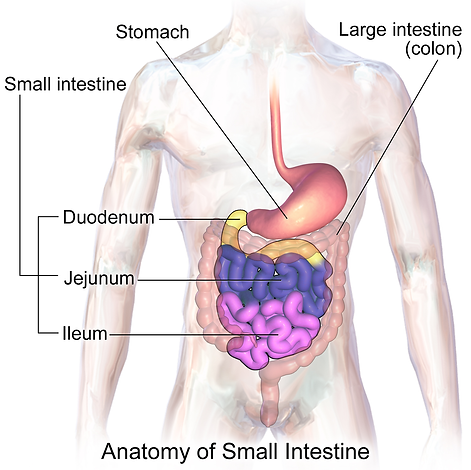
The small intestine is divided into three zones:
-
The Duodenum
-
The Jejunum
-
The Ileum
STRUCTURE:
-
The lining of the small intestine, cluding in the duodenum, has millions of INTERSTITIAL GLANDS which function to produce juices that contain enzymes like peptidase and maltase (disaccharides) which finish off the digestion process by digesting the final polymers into their monomers so absorption can begin.
-
The small intestine also has a ENDOCRINE FUNCTION
-
It can produce insulin which lowers blood glucose levels and glucagon which increases blood glucose levels
-
The Duodenum
DUODENUM:
-
The duodenum is the first 25 cm of the small intestine
-
This region of the intestine plays a major role in digestion as it receives secretions of other enzymes from the liver and the pancreas in order to aid in it the breakdown of fats, peptides (chains of amino acids), and other nutrient molecules into their monomers.

Villus
OVERVIEW:
-
The structure of the small intestine is related to its function of absorption.
-
The small intestine has long and convoluted walls to increase its surface area to allow absorption to occur more rapidly.
-
The surface area in the small intestine is also increased by finger-like projections called villi coming off the interstitial glands on the sides of the intestine.
-
-
ABSORPTION takes place across the wall of the villi both passively (without the use of ATP) or actively (with the use of ATP) depending on the type of molecules that is being absorbed and the location where it is being absorbed into.
