
INTERNAL AND EXTERNAL RESPIRATION
Overview
-
During respiration gases are exchanged between tissues in two places:
-
EXTERNAL RESPIRATION: occurs in the lungs between the air and blood plasma in the alveoli.
-
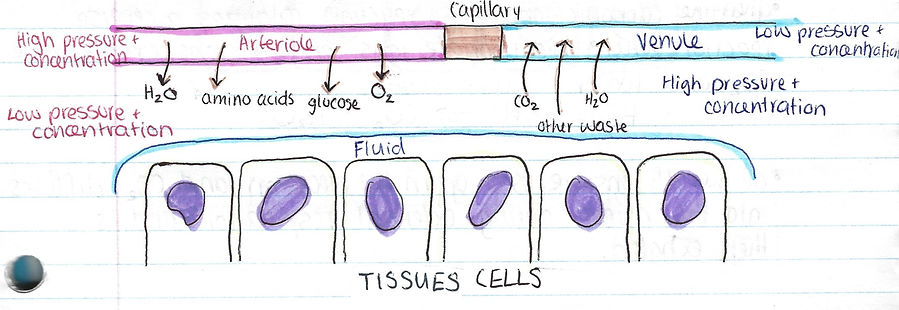
INTERNAL RESPIRATION: occurs between the blood plasma and the fluid in the tissue spaces.
ZONES OF THE LUNGS:
-
Conducting Zone: termed as ANATOMICAL DEAD ZONE
-
No gas exchange occurs here
-
Function is to moisten, clean and warm air as it travels into the respiratory zones
-
Made up of the trachea, nasal and oral cavity, bronchi, and bronchioles
-
-
Respiratory Zone: where gas exchange occurs
-
Made up of alveoli, alveolar ducts
-

Types of Respiration
External Respiration:
-
Diffusion of oxygen into the PULMONARY CAPILLARIES and the diffusion of carbon dioxide into the alveoli before expiration
-
In the blood at the alveoli the temperature is 37 degrees Celsius and the pH is 7.4 (slightly basic)
-
Under these conditions hemoglobin unbinds to the CO2 it carries and no longer transports anything
-
A single hemoglobin molecule on a red blood cell has four binding sites for either O2, CO2 or H+
-
-
CO2 diffuses out of the bloodstream and into the alveoli sacs where there is a lower concentration and pressure
-
O2 diffuses into the bloodstream from the alveoli where there is a lower O2 concentration and pressure
-
This allows O2 to bind to hemoglobin in the blood creating oxyhemoglobin (HbO2)
-
O2 + Hb ---> HbO2 / Co2Hb ---> CO2 + Hb
-
-
99%of hemoglobins binding sites are full with O2 as blood leaves the lungs
Factors that Affect the Lungs
Aging:
-
Lung function changes as we age
-
ie. children breathe large volumes of air at rest than adults due to their body needing more oxygen for growth, metabolic function
-
-
Lung function changes with muscle mass
-
ie. men have a larger lung volume than females due to females having smaller lungs and a smaller body size and weight
-
-
Lung elasticity decreases making it harder for the lungs to repeatedly contract and expand
OVERVIEW OF AGING:
-
Decline in respiratory capacity (amount of air inhaled or exhaled)
-
Decline in aerobic capacity (VO2 max)
-
Lung elasticity and number of alveoli decrease after the age of 20
-
Immune system becomes weaker and is at more risk of infections
-
Muscle contractions get weaker preventing out body from effectively coughing to remove waste
-
Increases chances of getting chronic respiratory diseases
-
Heart rate and max stroke volume decreases causing decreased lung capacity so less O2 is obtained and used by the body

Effects of Respiratory Diseases:
-
Include diseases of the bronchioles, trachea, upper respiratory tract and lung tissue
-
Can be infection (tuberculosis) or noninfectious (asthma)
-
Noninfectious can be either obstructive (blocks airways and prevents O2 from entering the lungs) or restrictive (closes the lungs and prevents lungs from expanding to get O2 into the body)
SYMPTOMS OF RESPIRATORY DISEASE:
-
Chest Pain: may include serious lung disease
-
Excessive mucus which indicates viral or bacterial infection
-
-
Coughing: response to irritation and used to clear pathways
-
Difficulty Breathing: tissues low in O2 near the skin may get bluish spots under the skin called cyanosis

Smoking:
-
Causes lung cancer (almost always)
-
Tobacco smoking can also cause...
-
Bronchitis, emphysema, coronary artery disease, stroke
-
-
Damaging components in smoke...
-
Tar, carbon monoxide, nitrogen gas, nitric oxide
-
Occurs in greater concentrations in sidestream smoke (send-hand smoking) than mainstream smoke (first-hand smoking)
-
SHORT TERM EFFECTS:
-
Rise in carbon monoxide which is a competitive inhibitor for oxygen gas
-
Raises blood pressure and pulse (body wants more oxygen to remove waste)
-
Suppression of appetite
-
Muscular tension
-
Cancer (tumors are malignant and can easily spread)
-
Diabetes
-
Damage to arteries in brain due to lack of oxygen (stroke)
-
Coronary artery disease
High Altitudes:
-
Less air to breathe
-
Atmospheric air pressure decreases so less oxygen gas in atmosphere and also less oxygen gas entering the lungs (causes a small pressure difference between the lungs and atmospheric air therefore, does not enter as rapidly)
-
2000 - 3000 metres up causes breathlessness and nausea, but 7000 meters and higher can cause unconsciousness and death if they do not return down
-
Climbers need to climb to high elevations slowly so their body can make adjustments to the low pressure
-
Bone marrow begins to make more hemoglobin molecules so more red blood cells can be produced
-
Increased red blood cells allow more oxygen gas to be carried to cells and tissues in the body at high elevations
-
-
BREATHING RATE:
-
Increases so more gas exchange can occur
-
More oxygen gas is accepted into the blood and given to tissues
-
More external respiration
DECREASED BLOOD pH:
-
Kidneys begin to release more H+ ions
-
Kidneys reabsorb HCO3 to prevent more CO2 development
-
H+ ions combine with more hB (hemoglobin) and both H+ and CO2 need to be removed more rapidly )increased breathing is how they are able to be released from the body)
-
Buffers accept H+ ions in the blood
-
SInce there is more H+ in the body it allows for more reduced hemoglobin (HHb) and CO2 to be created which needs to be exhaled and this causes the breathing rate to increase
Effects of Exercise:
-
Increased rate and depth of breathing
-
Increased depth and rate of breathing allows for more oxygen gas (air) to be drawn into the lungs (increases VO2 max)
-
Increased stroke volume and heart rate allows for more waste to be removed and oxygen to be used in the body per breathing
EXERCISE CAN ...
-
Increase respiratory efficiency (increases the number of alveoli)
-
Increases VO2 Max and improves the binding and unbinding of oxygen to Hb
-
Strengthens muscle performance as they are more frequently used (ie. stronger diaphragmatic performance)
-
Improves cardiovascular efficiency (better delivery of oxygen in the body)
-
-
VO2 Max is the maximum amount of oxygen that can be used in the body
-
During exercise oxygen is used by muscles to contract and produce more ATP in cellular respiration
-
Athletes can reach a 90% VO2 Max
-
However, when we exercise too hard, not enough oxygen can be delivered to our muscles via the aerobic system
-
Our body uses anaerobic system which causes lactic acid to build up in the blood which then diffuses into our muscles and make sus sore
-
OVERALL:
-
More alveoli allows more for oxygen exchange of gases
-
More capillaries in muscles allows them to get more oxygen and increases VO2 Max
-
Strengthens muscles like the diaphragm and intercostal muscles and allows thoracic cavity to get bigger so more oxygen can enter the lungs